
Single Tooth Implant
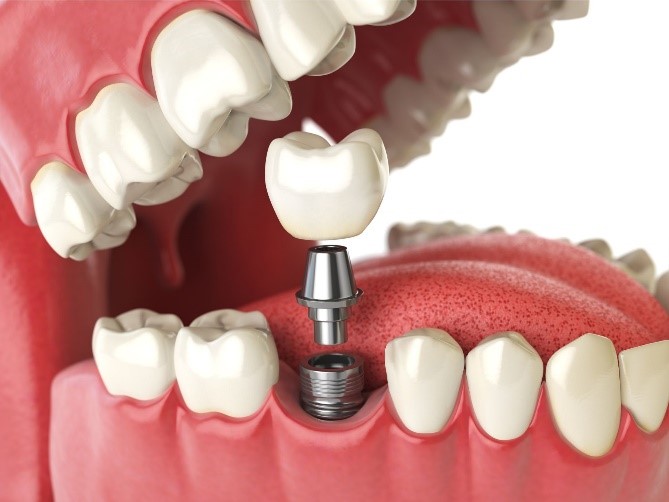
Do you have missing tooth??? Don't ignore missing back teeth Losing multiple tooth from decay, gum disease or neglect will have a domino effect resulting in bone loss around your remaining teeth causing them to become loose, rotated and mobile. Don't be complacent just because your missing teeth are in the back of your mouth! To avoid the risk of cascading harm to neighbouring teeth, your lost teeth should be replaced as soon as possible with implants.
Single-tooth implants can be used in people who have missing tooth. An implant is surgically placed in an opening that is made by your dentist in the jawbone. After the implant integrates (attaches) to your bone, it acts as a new "root" for the crown that will be replacing your missing tooth. A crown (cap), which is made to look like a natural tooth, is attached to the implant and fills the space left in the mouth by the missing tooth.
For this procedure to work, there must be enough bone in the jaw, and the bone has to be strong enough to hold and support the implant. If there is not enough bone, be may need to be added with a procedure called bone augmentation. In addition, natural teeth and supporting tissues near where the implant will be placed must be in good health.
Multiple Implants
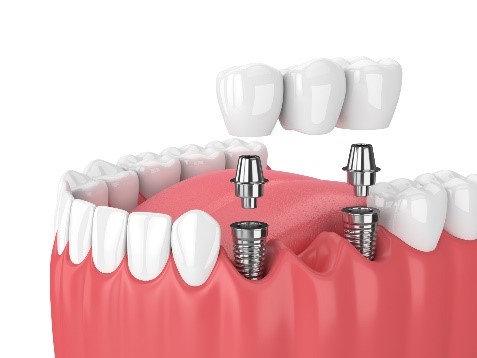
Just as with one missing tooth, several missing teeth can be easily treated with dental implants. Implant supported teeth are permanently fixed in the mouth, unlike removable appliances like dentures. They don't slip or click, and there is no worry about them moving or falling out when speaking, eating, or participating in activities. And because dental implants are placed directly into the bone, they help preserve the jawbone and prevent bone deterioration.
Advantages of Implant Retained Dentures
Implant Supported Dentures
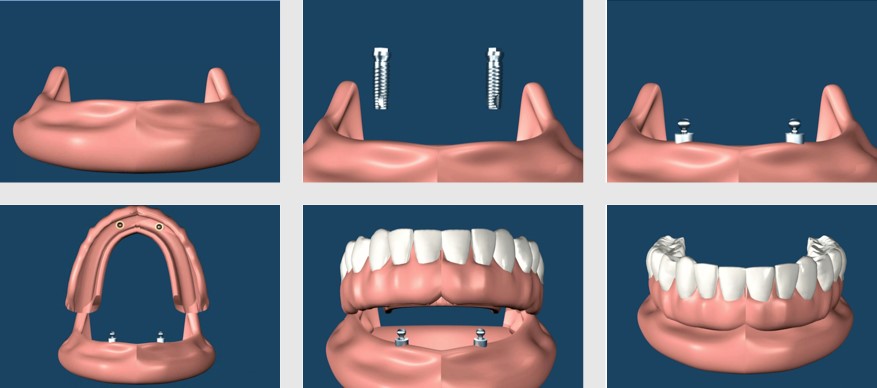
An implant-supported denture is used when a person doesn't have any teeth in the jaw, but has enough bone in the jaw to support implants. An implant-supported denture has special attachments that snap onto attachments on the implants.
Implant-supported dentures usually are made for the lower jaw because regular dentures tend to be less stable there. Usually, a regular denture made to fit an upper jaw is quite stable on its own and doesn't need the extra support offered by implants. However, you can receive an implant-supported denture in either the upper or lower jaw.
Full fixed Implants
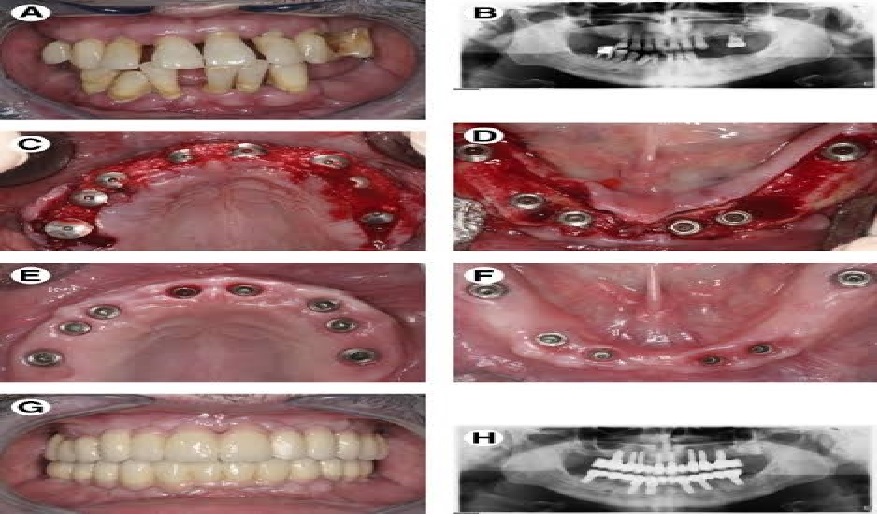
Technically, full mouth dental implant is a procedure that replaces the entire set of teeth from your upper jaw, lower jaw, or both. A set of implants is anchored and prostheses are loaded to bring back your strong natural look of teeth. You can choose to go with the replacement of your upper arch, lower arch or full mouth dental implant.